
How to Prevent Loose Stones in Iced Out Chains and Pendants
Learn how to prevent loose stones in iced out chains and pendants through secure stone settings, proper manufacturing techniques, and quality control. Discover how MISSJEWELRY helps jewelry brands reduce stone loss and ensure consistent quality before bulk production.
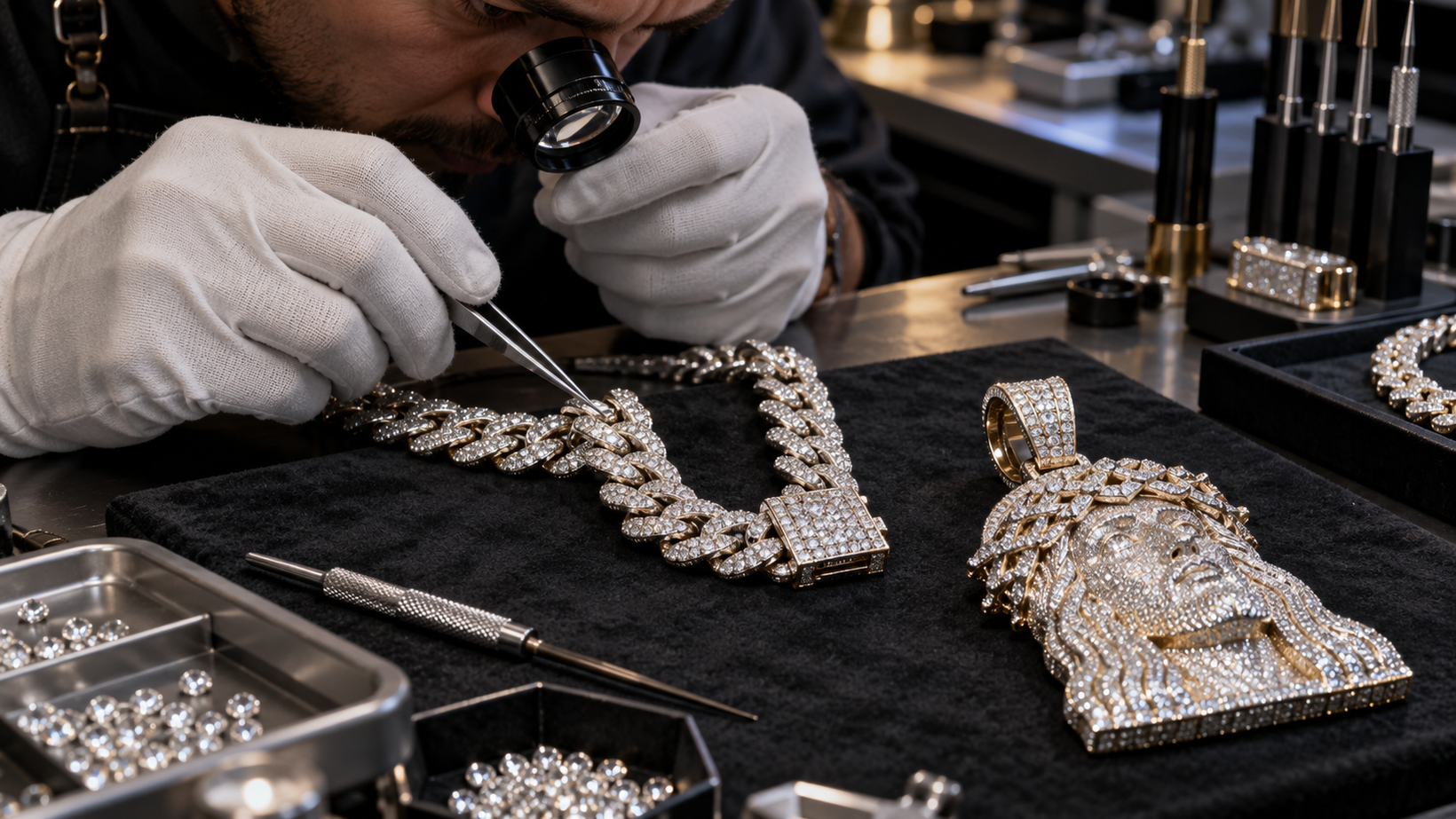
Loose stones are a common quality concern in iced out chains and pendants, especially when jewelry features dense stone settings, moving links, and complex structures. Preventing stone loss requires proper prong design, accurate stone sizing, careful manufacturing, and effective quality control throughout production. Even with well-controlled manufacturing processes, no factory can guarantee that every stone will remain secure under all conditions because stone retention is influenced by design, materials, manufacturing variations, handling, and wear. This guide explains how MISSJEWELRY manages these risks, corrects weak stone-setting structures, and checks stone security before bulk jewelry orders are accepted.
Why Do Stones Become Loose in Iced Out Jewelry?
Stones may become loose when their settings fail to provide sufficient retention. Common causes include weak prongs, incorrect stone dimensions, adhesive bonding failure, manufacturing variations, assembly pressure, polishing damage, or repeated impact during wear. The risk also depends on the jewelry material and setting method, as adhesive-set stones in some stainless steel designs behave differently from mechanically secured stones in brass and sterling silver jewelry.
Weak Prongs and Insufficient Metal Suppor
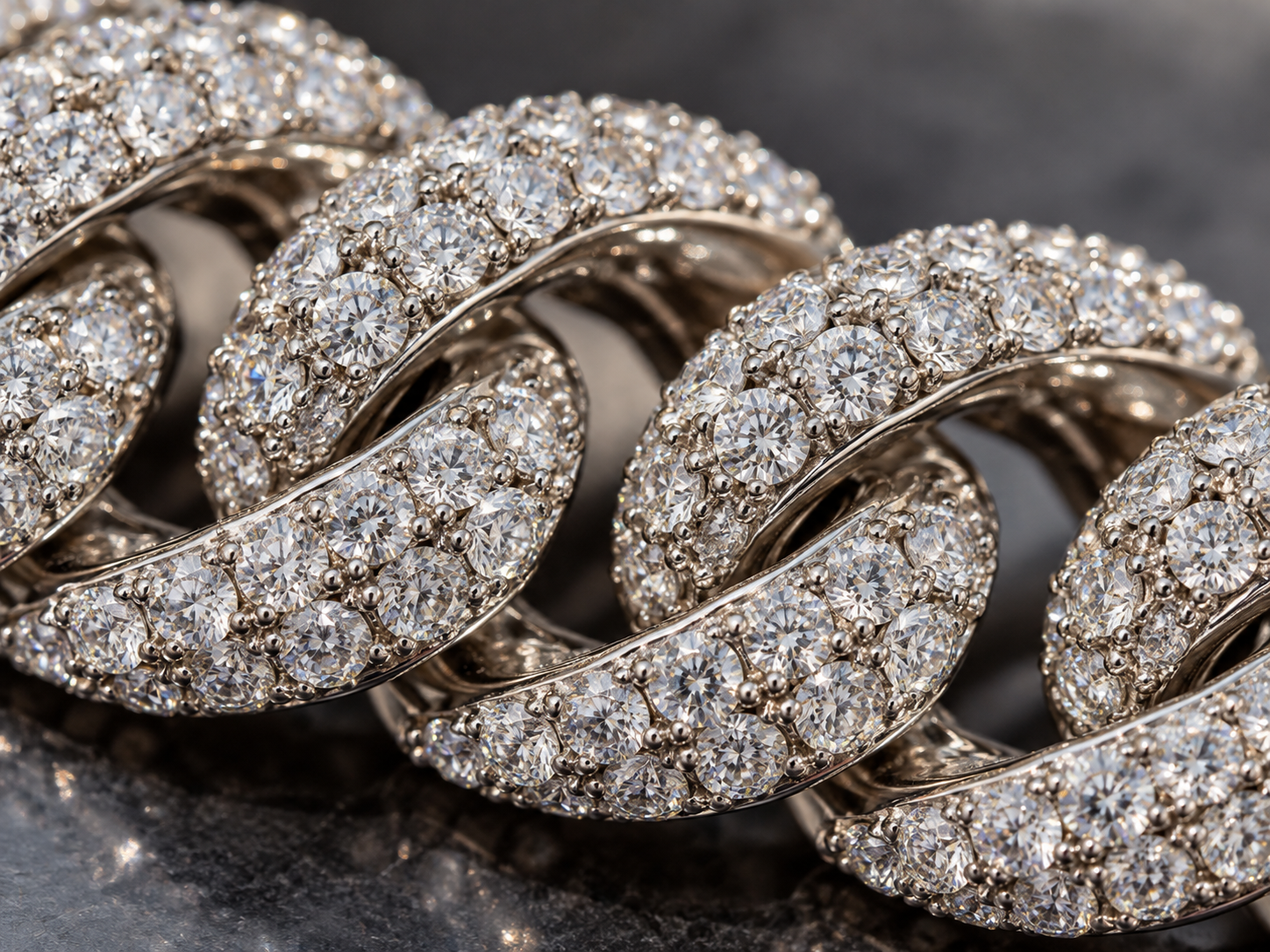
Prongs, beads, bezels, and other retention structures hold gemstones in position. Their dimensions and placement directly affect how securely a stone sits in its setting.If prongs are too thin, too short, incorrectly positioned, or poorly formed, they may not provide enough contact with the stone's edge.This issue is particularly important in iced out Cuban chains and tennis chains, where many small stones are positioned close together.Manufacturers should pay attention to:
- Prong height, thickness, and position.
- Available metal support around each stone seat.
- Stone alignment and spacing.
- Proper contact between prongs and stone edges.
- Structural consistency across individual chain links.
Secure stone setting depends on properly formed retention structures rather than simply applying greater pressure during installation.
Mold and Wax Pattern Variations
During jewelry manufacturing, small setting details can change during mold making, wax pattern production, and casting.Some complex jewelry designs contain thick sections, fine details, or densely arranged stone seats. In these cases, small prong features may lose definition or become shorter or thinner than intended.If inadequate prong structures are carried into casting, the finished metal components may not provide sufficient support for secure stone setting.At MISSJEWELRY, our factory pays attention to these production risks and, when suitable, corrects inadequate prong details at the wax stage before proceeding with subsequent manufacturing.
Incorrect Stone Size and Setting Fit
Gemstone dimensions must be compatible with the prepared stone seats and surrounding retention structures.An undersized stone may not receive sufficient support. An oversized stone may require excessive setting pressure or affect the surrounding metal.This becomes especially important when jewelry contains curved surfaces, raised designs, or stones positioned at different heights.Even relatively small differences between stone dimensions and setting geometry can affect stone stability.
Chain Assembly and Polishing Damage
Iced out chains often require manual assembly and finishing.During some chain assembly operations, workers use tools to position and connect individual links. If these tools contact delicate prongs, they may cause slight displacement or deformation.Polishing can also affect stone security if excessive finishing removes supporting metal or damages small retention structures.These risks cannot always be eliminated completely, but appropriate handling methods and inspection checkpoints can help identify problems before shipment.
How to Design Iced Out Jewelry for Secure Settings
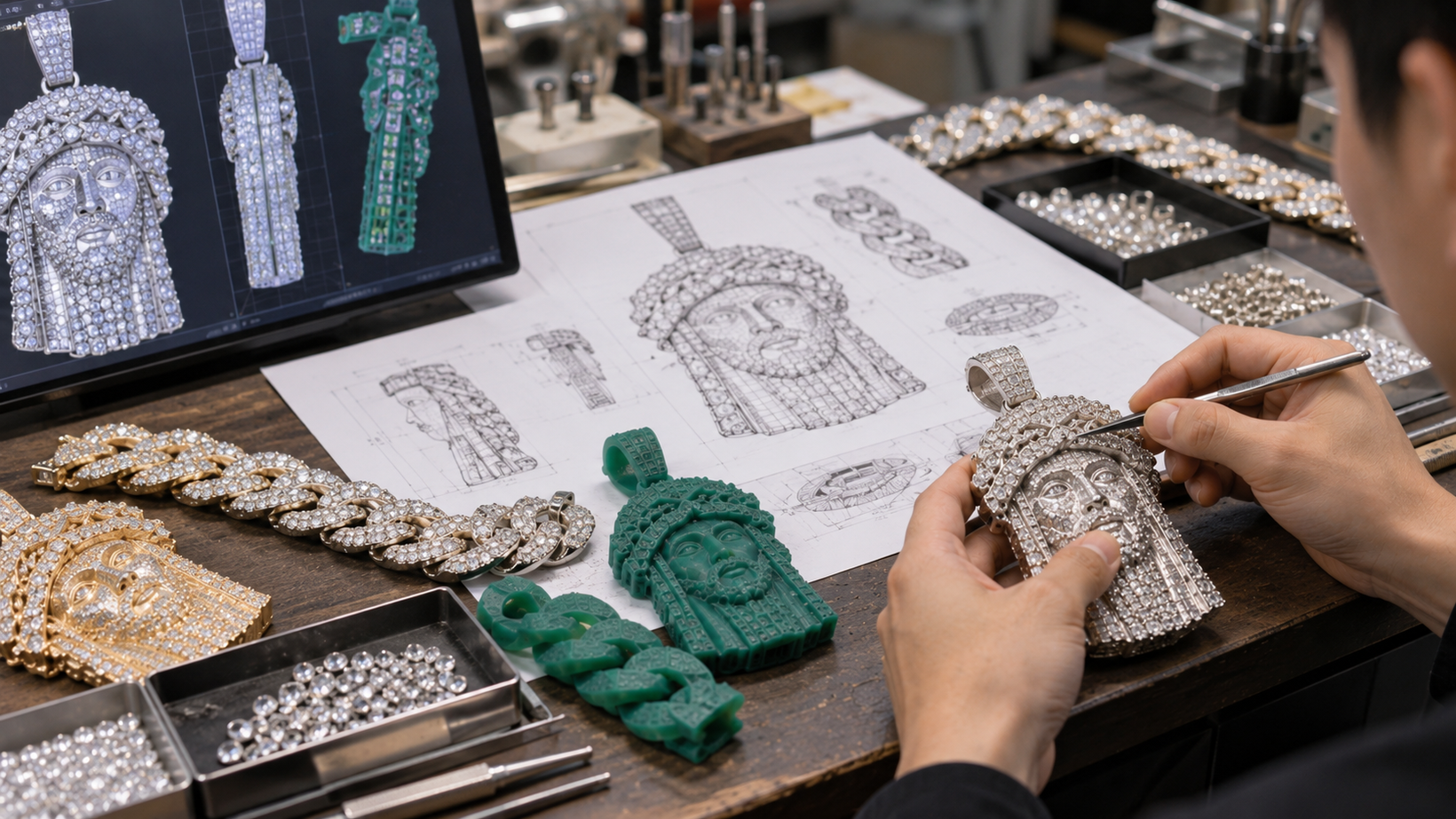
Stone security begins during product development, not only during the stone-setting process.For custom hip-hop jewelry, manufacturers must balance visual impact, stone coverage, structural strength, and production feasibility.
Optimize Prong Design and Stone Spacing
CAD development provides an opportunity to evaluate the arrangement of stones, prong dimensions, and available metal support.For densely set jewelry, designers should consider whether the planned stone spacing allows enough metal to secure each gemstone.Extremely fine prongs and crowded settings may create additional manufacturing challenges, particularly when small details must be reproduced through molding and casting.The design should also account for potential changes during wax pattern production, casting, and polishing.A prong that looks sufficient in a digital design must still retain enough functional metal after manufacturing.
Account for Curved and Uneven Surfaces
Iced out pendants and Cuban chain links frequently feature curved surfaces, raised logos, recessed areas, and different stone-setting heights.These features can complicate stone placement because individual stones may sit at different angles.Manufacturers should evaluate whether the prongs and stone seats provide suitable support across these different surfaces.Particular attention should be given to exposed edges, raised sections, and crowded setting areas.
Match Stone-Setting Methods to Different Jewelry Metals
Different jewelry metals may require different stone-setting methods, which can directly influence gemstone retention and long-term durability. Choosing a suitable setting structure for each material is an important step in reducing the risk of loose stones.
Stainless Steel Jewelry: In some stainless steel jewelry designs, gemstones are secured with adhesive rather than traditional prongs. Adhesive-set stones may become loose if bonding strength deteriorates or the jewelry experiences repeated impact, friction, or other stresses. Where the product design and manufacturing conditions allow, CNC machining can be used to create precise stone seats for an appropriate mechanical setting structure. This may provide an alternative to adhesive-only stone attachment and help improve stone retention.
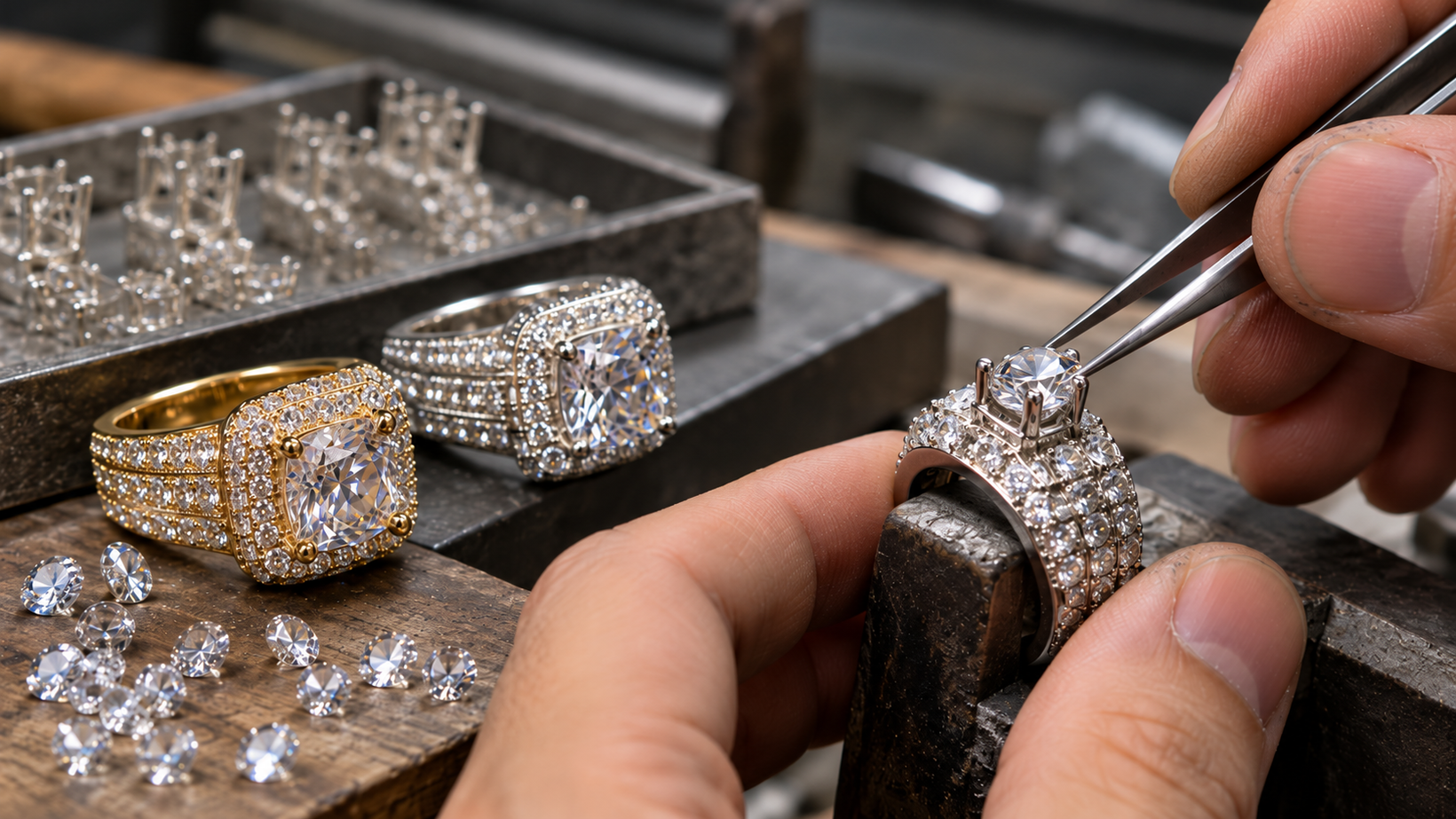
Brass and Sterling Silver Jewelry: In MISSJEWELRY's manufacturing experience, brass and 925 sterling silver iced out jewelry commonly uses prong settings. Properly formed prongs provide mechanical support around the gemstone, helping keep it securely positioned. When prong dimensions, stone sizes, and setting procedures are properly controlled, these settings generally offer reliable stone retention with a relatively low risk of loosening under normal use.However, no setting method can completely eliminate stone-loss risks. Actual performance depends on the jewelry design, metal properties, setting quality, manufacturing consistency, and conditions of use.
For jewelry brands and wholesalers, material selection should consider not only appearance and cost but also the stone-setting method, manufacturing feasibility, and expected product durability. Discussing these factors with the manufacturer before sample development can help reduce avoidable quality problems during bulk production.
Validate Samples Before Bulk Production
Physical samples help identify manufacturing issues that may not be obvious in CAD models.Before bulk production, manufacturers should evaluate the sample's stone fit, prong condition, overall construction, and relevant functional requirements.For jewelry produced through wax-based casting, the reproduction of fine prong details deserves particular attention.If a weak setting structure is identified, correcting it during development can help prevent the same issue from appearing repeatedly in bulk production.
How to Prevent Loose Stones in Iced Out Chains
Iced out Cuban chains and tennis chains require particular attention because their components must move while supporting multiple gemstone settings.Unlike rigid jewelry, chain links are exposed to repeated movement, contact, and handling.
Protect Prongs During Chain Assembl
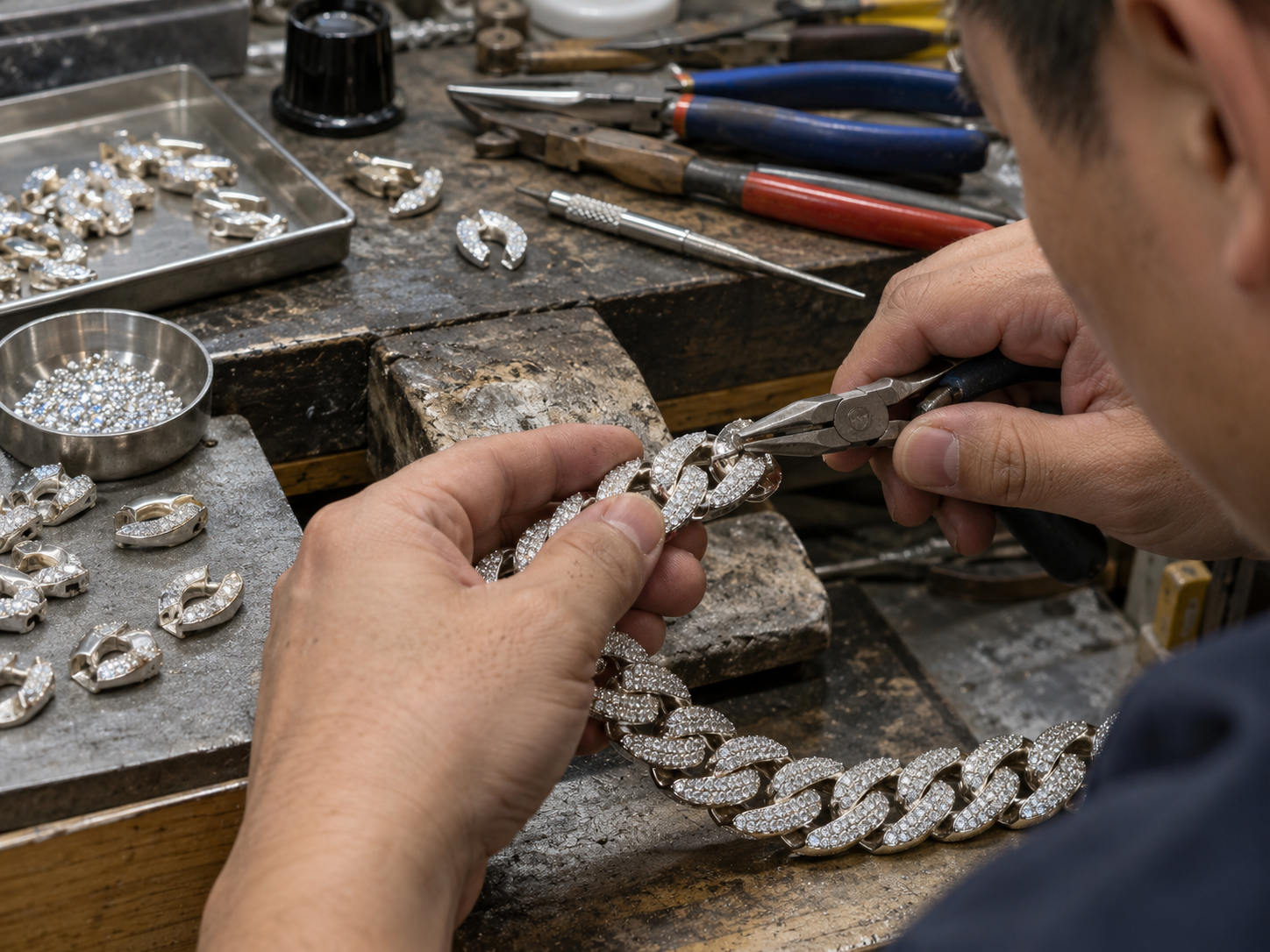
During the assembly of certain chain designs, workers may use pliers or other tools to connect and position individual links.This manual process can occasionally place pressure on nearby prongs.If a tool touches an exposed prong, its position may shift slightly. This can affect the contact between the prong and gemstone, increasing the risk of looseness.At MISSJEWELRY, we recognize this risk during chain manufacturing.The production team pays attention to vulnerable setting areas, while subsequent quality checks help identify prongs that may have been displaced or damaged during assembly.
Maintain Appropriate Link Movement
Cuban chains and tennis chains need sufficient flexibility for comfortable wear.However, if adjacent links, stones, or exposed prongs interfere with one another during movement, repeated contact may affect vulnerable settings.Manufacturers should therefore consider:
- Clearance between moving links.
- Stone positions near articulation points.
- Contact between adjacent settings.
- Whether link movement causes unnecessary pressure.
- Stone stability after assembly and finishing.
The objective is to maintain chain flexibility without compromising the structures responsible for securing gemstones.
Inspect Stone Settings After Assembly
Settings that appear secure immediately after stone setting can be affected by later handling or assembly operations.For this reason, it is important to check vulnerable areas after the chain has been assembled.The inspection should focus on stone position, visible prong damage, abnormal movement, and potential interference between neighboring components.
How to Secure Stones in Oversized Iced Out Pendants
Oversized iced out pendants present different engineering challenges from chains.Large pendants may feature complex logos, curved outlines, raised sections, heavy structures, and stones positioned across multiple surface levels.These characteristics require careful consideration during development and production.
Reinforce Critical Setting Areas
Large pendants often contain decorative cutouts, narrow connecting sections, corners, and densely covered stone surfaces.If these areas lack sufficient supporting metal, their settings may be more vulnerable to impact or deformation.Manufacturers should evaluate the supporting structures around stone seats and areas likely to experience concentrated stress.
Manage Different Stone-Setting Heights
On raised logos and curved pendant surfaces, gemstones may be installed at different angles and heights.If prongs are not positioned correctly for the individual stone seats, some stones may receive insufficient support.Accurate stone sizing, suitable prong geometry, and careful sample evaluation can help reduce these risks.
Balance Pendant Weight and Wearability
Large pendants should also be evaluated for weight distribution, attachment structure, and wearing position.Poor balance can create unwanted rotation or contact during wear.Although better weight distribution cannot eliminate every impact risk, it can improve comfort and help reduce unnecessary movement.
Protect Exposed Edge Stones
Stones positioned near pendant edges, protruding sections, and corners may be more vulnerable to accidental contact.Where necessary, manufacturers may adjust stone spacing, strengthen metal support, or modify the setting structure.The goal is to achieve strong visual impact while maintaining practical structural reliability.
How MISSJEWELRY Corrects Weak Prongs During Manufacturing
At MISSJEWELRY, we understand that stone retention is influenced by multiple manufacturing factors.Our factory works to control these risks throughout production, but we do not consider complete prevention of stone loss under every possible condition to be a realistic guarantee.When inadequate prong structures are identified, one of our practical corrective methods is to rebuild weak prongs on the wax pattern before casting and adjust the stone-setting process as needed.
Step 1: Identify Weak or Incomplete Prongs
During manufacturing, certain designs may develop prongs that are too short, too thin, or insufficiently defined.This is more likely to require attention in designs with complex details, thick sections, or crowded settings.The production team evaluates whether the affected prongs have enough height, thickness, and suitable positioning to support the intended gemstones.
Step 2: Repair Prongs on the Wax Pattern
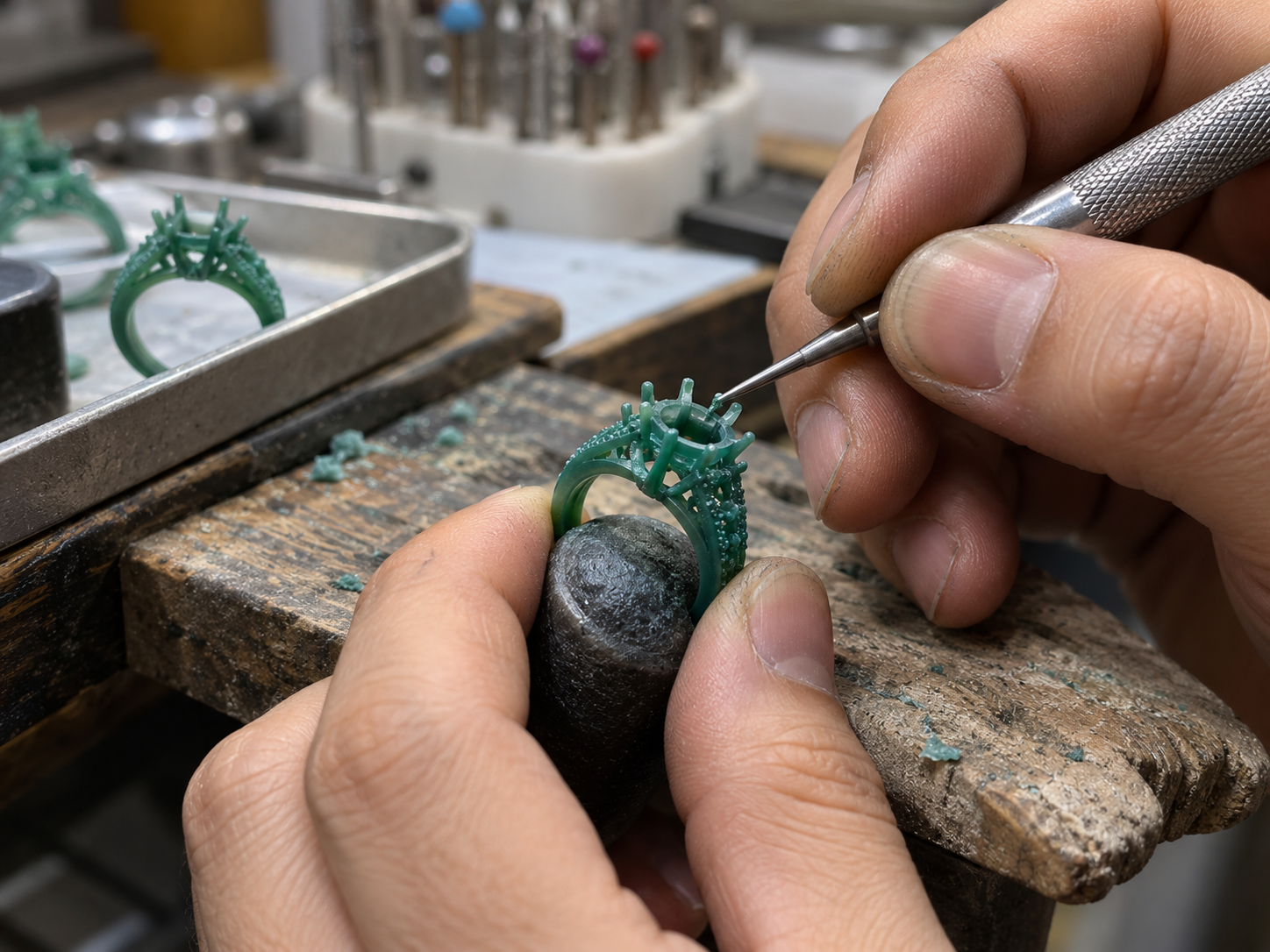
When correction at the wax stage is suitable, our technicians add and shape wax material to rebuild inadequate prong features.This process is commonly referred to as repairing or adding prongs on the wax model.The purpose is to restore the necessary structure before the metal component is produced.Technicians must consider the intended stone dimensions and setting position when adjusting these details.
Step 3: Remold or Recast as Required
After correcting the wax-stage details, the affected design can proceed through the appropriate molding or casting process.Depending on the underlying issue, further adjustments to the model or mold may be necessary to reproduce the corrected prong structure consistently.The resulting metal component should provide suitable material and geometry for the intended stone setting.
Step 4: Adjust the Stone Setting
After casting and preparation, the stone-setting technician evaluates the fit between the gemstone and its metal setting.If necessary, suitable adjustments are made to the setting to improve stone positioning and retention.The technician checks whether the available prongs can provide appropriate contact with the stone without damaging it or weakening the supporting metal.The objective is to address the underlying setting structure rather than simply pushing a loose stone back into position.
Step 5: Reinspect the Corrected Jewelry
After correction and stone setting, the jewelry undergoes relevant quality checks to verify that the gemstone is properly positioned and does not show obvious looseness.Additional checks are performed following finishing and during final quality inspection.If a setting remains unacceptable, further evaluation or correction is required before the product can be accepted.Wax-stage repairs are a preventive and manufacturing correction method. They cannot directly repair a finished piece that has already been delivered.For finished jewelry with loose stones, the factory must assess whether the metal setting can be safely repaired or whether an affected component needs to be reproduced.
How MISSJEWELRY Checks Stone Security After Correction
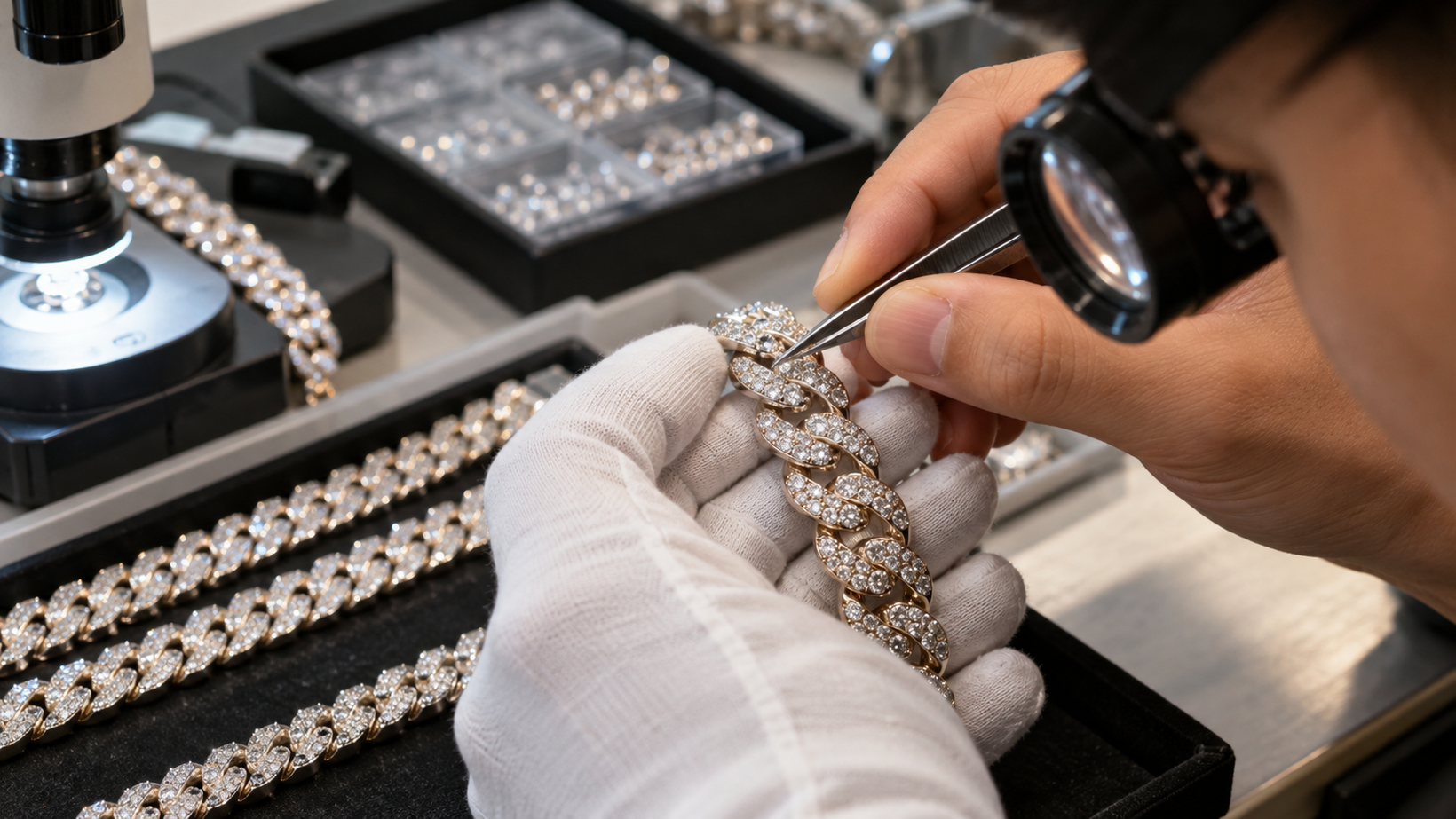
Correcting a weak prong is only one part of preventing stone loss.The corrected jewelry must also be checked to determine whether the prongs properly support the gemstones and whether the finished product meets the required appearance and quality expectations.MISSJEWELRY uses practical inspection methods that include visual examination, magnified inspection, gentle stability checks, movement observation, and final appearance checks.These methods are applied according to the jewelry structure, gemstone type, setting design, and relevant production requirements.
- Check Prong Coverage and Position
The first inspection focuses on whether each relevant prong is properly formed and positioned.QC personnel examine whether:
- Each prong properly overlaps or supports the stone edge at its intended retention point.
- Prongs are free from visible cracks or fractures.
- No prongs are broken or noticeably displaced.
- Prong heights are appropriate and consistent with the approved setting design.
- The stone is correctly seated and aligned.
Prongs do not need to cover the entire gemstone edge. Their contact and coverage must be appropriate for the specific setting structure.
2. Inspect Prongs Under Magnification
Small setting defects may be difficult to identify with the naked eye.QC personnel use magnification to examine the contact between the stone and the surrounding metal.The inspection checks for:
- Abnormal gaps between prongs and stone edges.
- Improperly formed or displaced prongs.
- Visible damage to retention points.
- Incorrect stone positioning.
- Weak or incomplete supporting structures.
Magnified inspection helps identify potential setting problems that may not be obvious during ordinary visual examination.Any gap or clearance must be evaluated according to the actual setting design rather than assuming that all visible spaces indicate failure.
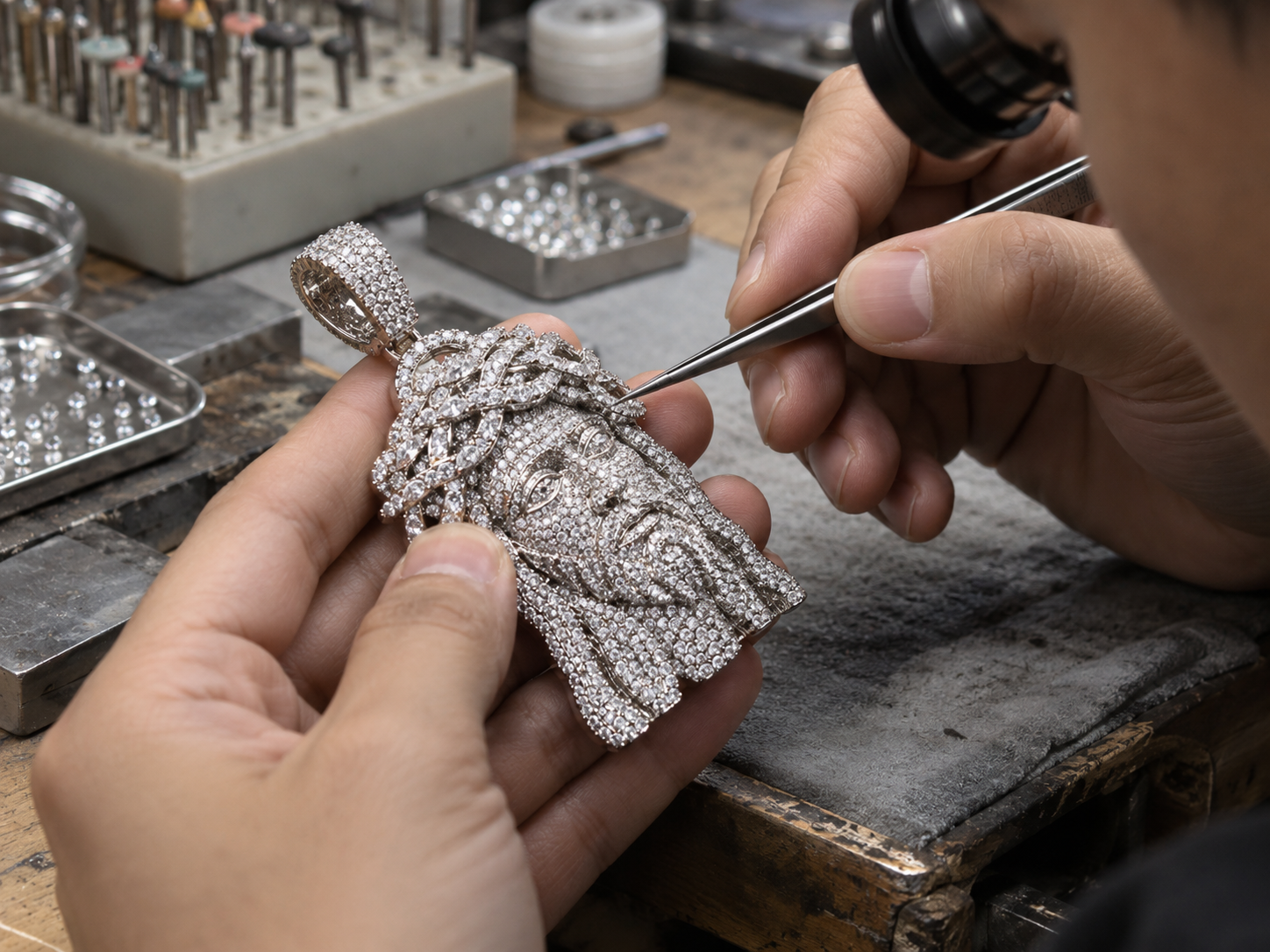
3. Perform Gentle Stone Stability Check
After examining the setting, trained personnel may use gentle physical checks to identify obvious stone movement.Depending on the gemstone and setting type, these checks can include:
- Applying light, controlled pressure to a suitable area of the stone.
- Gently testing stone movement with an appropriate tool or tweezers.
- Observing whether the stone rocks or shifts in its setting.
- Checking the stone from different directions for visible movement.
The purpose is to identify signs of looseness without causing damage.These checks should be performed carefully by qualified personnel using methods suitable for the jewelry design.Excessive force must be avoided because it may damage gemstones, bend prongs, or create defects that were not present before inspection.
4. Check Stability During Gentle Movement
Some stone-setting problems become more noticeable when jewelry moves.For products where these checks are appropriate, QC personnel may examine stone stability while gently moving or shaking the jewelry.Relevant checks may include:
- Gentle vibration or shaking.
- Repeated movement of the finished product.
- Controlled movement of flexible chain links.
- Observation of stones during normal articulation.
- Examination of settings after movement.
For Cuban chains and tennis chains, attention should be given to areas where links move or may contact neighboring settings.The stones should not exhibit obvious unintended movement during the applicable checks.These gentle movement checks are practical screening methods, not universal laboratory tests. Their suitability and acceptance criteria depend on the product structure and agreed quality requirements.
5. Inspect the Final Appearance and Setting Structure
Stone stability is important, but the setting must also remain free from unacceptable structural or visible defects.During the final review, QC personnel check for:
- No visible cracked or broken prongs.
- No unacceptable chips or notches in the setting.
- No unacceptable scratches or visible surface damage.
- No deformation of stone seats or setting structures.
- No missing stones.
- No visibly loose or incorrectly positioned stones.
- No damage introduced during correction or inspection.
If a product does not meet the applicable requirements, the affected area must be evaluated and corrected before acceptance.
Stone Security QC Reference
| Inspection Stage | Main Inspection Focus | Acceptance Consideration |
|---|---|---|
| Visual prong inspection | Prong coverage, height, position, and condition | Prongs correctly formed and supporting stones |
| Magnified inspection | Gaps, stone contact, and small setting defects | No unacceptable gaps or visible structural defects |
| Gentle stability check | Stone movement under light, controlled contact | No obvious unintended looseness |
| Directional observation | Stone movement from different viewing directions | Stone remains correctly seated |
| Gentle movement check | Stability during appropriate shaking or link movement | No obvious movement or setting interference |
| Final appearance inspection | Cracks, chips, scratches, missing stones, and deformation | Finished product meets agreed quality requirements |
These controls help identify manufacturing defects before shipment, but they cannot guarantee that a stone will never become loose after prolonged wear, accidental impact, or inappropriate handling.
How to Maintain Stone Security During Bulk Production
An approved sample is an important reference for bulk production.However, sample approval alone does not guarantee that every subsequent piece will have identical stone retention performance.Manufacturers must manage production consistency and identify possible variations throughout manufacturing.
Confirm Stone and Setting Specifications
Before bulk production, the manufacturer and buyer should confirm important product specifications.These may include:
- Metal type and intended finish.
- Gemstone type, size, and layout.
- Prong or setting structure.
- Approved product dimensions.
- Chain flexibility or pendant construction.
- Relevant appearance and quality requirements.
Clear specifications provide a reference for production and subsequent inspection.
Control Wax and Casting Consistency
For jewelry produced through wax-based casting, small setting features require careful attention.If the same prong defect appears repeatedly, correcting individual wax patterns may not be sufficient.The production team may need to review the original design, mold condition, or wax production process.Addressing recurring structural issues at their source can reduce the need for repeated corrections during later production stages.
Check Settings After Assembly and Polishing
Chain assembly and polishing can introduce additional variation after the components have been manufactured.Appropriate inspection should therefore consider whether these operations have affected prong position, metal support, or stone stability.For chains, vulnerable areas include moving joints, exposed edge settings, and locations close to tool contact points.For pendants, attention should be given to protruding details, corners, and raised setting areas.
Correct Defects Before Acceptance
If loose stones, damaged prongs, or unacceptable setting defects are identified, the affected product should be evaluated.The appropriate correction depends on the type and severity of the problem.Some settings may be safely adjusted or repaired. Others may require additional manufacturing work or replacement of the affected component.After correction, the relevant inspections should be repeated.Products should only be accepted when they meet the agreed quality and appearance requirements.
Maintain Sample-to-Bulk Consistenc
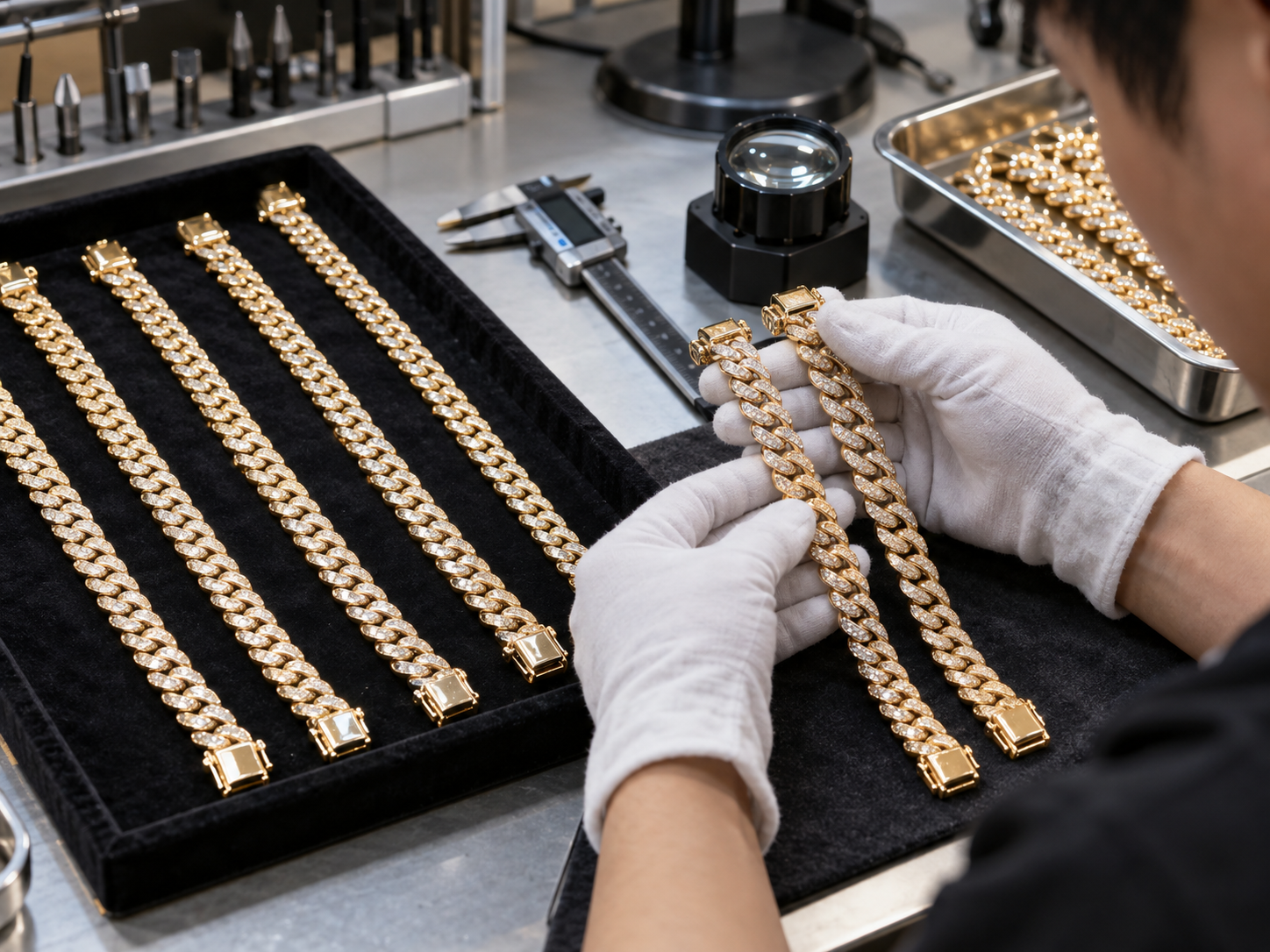
For jewelry brands and wholesalers, consistent quality across repeat orders is particularly important.Approved samples and documented specifications help establish expectations for subsequent production.When necessary changes are made to stone dimensions, setting structures, or manufacturing methods, these changes should be reviewed and confirmed before bulk production proceeds.The goal is to minimize avoidable differences between approved samples and delivered products.
What Should Buyers Check Before Bulk Jewelry Orders?
For jewelry brands, wholesalers, and online retailers, stone security should be considered during supplier selection and sample approval.A manufacturer should understand not only how to install gemstones but also how earlier production stages affect the finished setting.
Pre-Production Stone Security Checklist
| Inspection Area | What Buyers Should Confirm |
|---|---|
| Prong design | Are the prongs suitable for the planned stone sizes and setting structure? |
| Wax pattern quality | Can small prong details be reproduced adequately? |
| Stone fit | Are the stone dimensions compatible with the prepared seats? |
| Chain assembly | How are exposed settings protected during tool-assisted assembly? |
| Stone setting QC | How does the factory identify loose or incorrectly seated stones? |
| Magnified inspection | Are small prong defects and abnormal gaps examined? |
| Stability checks | What gentle movement or stability checks are appropriate? |
| Defect correction | How are weak prongs repaired and corrected products reinspected? |
| Final inspection | Are missing stones, damaged prongs, scratches, and setting deformation checked? |
| Bulk consistency | How are approved specifications maintained across production orders? |
This checklist helps buyers discuss clear quality expectations with potential manufacturing partners.
Understand the Limits of Stone Retention
No stone-setting method can eliminate every possible risk of stone loss.Long-term performance can also be affected by accidental impacts, repeated friction, jewelry structure, and the way a product is handled or worn.A responsible manufacturing process should therefore focus on reducing avoidable defects through suitable design, controlled production, correction of identified problems, and appropriate quality inspections.Reliable quality control means recognizing potential risks, managing them, and correcting unacceptable defects—not promising that stone loss can never occur.
Why Work With MISSJEWELRY for Custom Iced Out Jewelry?
MISSJEWELRY specializes in custom iced out jewelry, including Cuban chains, tennis chains, and oversized pendants. We focus on reliable manufacturing, quality control, and consistent bulk production.
Our factory addresses weak prongs through wax-stage corrections and setting adjustments when appropriate. QC includes visual inspections, magnified checks, and gentle stone stability tests to reduce preventable stone-loss risks.
While no manufacturer can guarantee zero stone loss, we strive to maintain quality from samples to repeat orders. Buyers can also refer to IGI and the FTC Jewelry Guides for gemstone identification and product disclosure guidance.
Conclusion
Preventing loose stones in iced out chains and pendants requires coordinated attention to prong design, wax pattern accuracy, stone fit, assembly, polishing, corrective manufacturing, and appropriate quality inspections. For jewelry brands and wholesalers, working with a manufacturer that understands these production risks and uses practical correction and QC methods can help reduce avoidable stone-loss problems and improve consistency between samples and bulk orders.
Develop Custom Iced Out Jewelry With MISSJEWELRY
Share your Cuban chain, tennis chain, or custom pendant design with MISSJEWELRY to discuss stone-setting feasibility, material options, sample development, quality requirements, and a custom manufacturing quotation.
Frequently Asked Questions
Why Do Stones Fall Out of Iced Out Chains?
Stones can become loose because of weak prongs, incorrect stone fit, manufacturing variations, assembly pressure, or damage during polishing and wear.
Can Weak Prongs Be Repaired Before Casting?
Yes. When suitable, inadequate prongs can be rebuilt on the wax pattern before casting to improve the intended stone-setting structure.At MISSJEWELRY, technicians may add and reshape wax to correct prongs that are too short, thin, or incomplete.The corrected design can then proceed through the appropriate molding or casting process, followed by stone-setting adjustments and inspection.
How Does MISSJEWELRY Check Loose Stones?
Our factory uses appropriate visual inspection, magnified examination, gentle stone stability checks, movement observation, and final appearance inspection.QC personnel examine prong coverage, alignment, cracks, abnormal gaps, and visible stone movement.Depending on the setting, gentle pressure, careful tool contact, and controlled movement checks may be used to identify obvious looseness without damaging the jewelry.
Can Any Factory Guarantee Stones Will Never Fall Out?
No. Even with carefully controlled manufacturing and quality inspection, no factory can guarantee that stones will remain secure under every possible condition.Stone retention depends on design, metal support, manufacturing quality, handling, impact, and long-term wear.Proper setting structures, suitable correction methods, and consistent QC can help reduce avoidable risks.
What Happens If Stones Become Loose After Delivery?
The affected setting should be examined to identify the cause before repair, adjustment, or component replacement is selected.A loose stone discovered after delivery may involve inadequate metal support, incorrect stone fit, manufacturing variation, impact, or handling damage.The appropriate solution depends on the condition of the gemstone and surrounding setting.If the defect originates from a recurring manufacturing issue, the underlying design or production process should also be reviewed to reduce the risk of repetition.
Need Iced Out Jewelry with Secure Stone Settings?
Loose stones can lead to costly returns and customer complaints. MISSJEWELRY helps jewelry brands reduce stone-loss risks through secure setting structures, sample evaluation, and consistent quality control. Share your custom iced out jewelry requirements and discuss your project with our manufacturing team.